" height="12.350237px" id="eP9TSXKa4" transform="translate(104.384 0.199)" width="5.876000000000005px"/><path d="M 4.472 12.35 L 2.47 12.35 C 2.418 12.35 2.392 12.321 2.392 12.264 L 2.392 2.141 L 0.087 2.141 C 0.029 2.141 0 2.112 0 2.054 L 0.017 0.069 C 0.017 0.023 0.04 0 0.087 0 L 6.83 0 C 6.893 0 6.925 0.023 6.925 0.069 L 6.925 2.054 C 6.925 2.112 6.902 2.141 6.856 2.141 L 4.524 2.141 L 4.542 12.264 C 4.542 12.321 4.519 12.35 4.472 12.35 Z" fill="rgb(0, 114, 244)" height="12.350237px" id="xxyldS8B5" transform="translate(96.947 0.199)" width="6.924700000000001px"/><path d="M 0 12.264 L 2.201 0.069 C 2.213 0.023 2.242 0 2.288 0 L 4.862 0 C 4.908 0 4.937 0.023 4.949 0.069 L 7.063 12.264 C 7.069 12.321 7.046 12.35 6.994 12.35 L 5.027 12.35 C 4.969 12.35 4.937 12.321 4.931 12.264 L 4.741 10.964 L 2.323 10.964 L 2.132 12.264 C 2.126 12.321 2.097 12.35 2.045 12.35 L 0.069 12.35 C 0.023 12.35 0 12.321 0 12.264 Z M 3.657 4.082 L 3.553 3.423 L 3.475 4.082 L 2.678 9.066 L 4.385 9.066 Z" fill="rgb(0, 114, 244)" height="12.350237px" id="aC4HhqfnR" transform="translate(89.814 0.199)" width="7.064273010380626px"/><path d="M 4.472 12.35 L 2.47 12.35 C 2.418 12.35 2.392 12.321 2.392 12.264 L 2.392 2.141 L 0.087 2.141 C 0.029 2.141 0 2.112 0 2.054 L 0.017 0.069 C 0.017 0.023 0.04 0 0.087 0 L 6.829 0 C 6.893 0 6.925 0.023 6.925 0.069 L 6.925 2.054 C 6.925 2.112 6.902 2.141 6.856 2.141 L 4.524 2.141 L 4.541 12.264 C 4.541 12.321 4.518 12.35 4.472 12.35 Z" fill="rgb(0, 114, 244)" height="12.350237px" id="G0XNp6uDQ" transform="translate(82.976 0.199)" width="6.924800000000005px"/><path d="M 3.475 12.706 C 2.846 12.706 2.265 12.544 1.733 12.22 C 1.208 11.897 0.786 11.466 0.468 10.929 C 0.156 10.386 0 9.791 0 9.144 L 0 8.329 C 0 8.265 0.029 8.234 0.087 8.234 L 2.08 8.234 C 2.126 8.234 2.149 8.265 2.149 8.329 L 2.149 9.144 C 2.149 9.531 2.279 9.866 2.539 10.149 C 2.799 10.426 3.111 10.565 3.475 10.565 C 3.845 10.565 4.16 10.423 4.42 10.14 C 4.68 9.851 4.81 9.519 4.81 9.144 C 4.81 8.71 4.527 8.332 3.961 8.008 C 3.868 7.95 3.747 7.881 3.597 7.8 C 3.452 7.713 3.279 7.615 3.077 7.505 C 2.875 7.396 2.678 7.289 2.487 7.185 C 2.297 7.075 2.112 6.971 1.933 6.873 C 1.286 6.491 0.803 6.015 0.485 5.443 C 0.173 4.865 0.017 4.218 0.017 3.501 C 0.017 2.843 0.179 2.248 0.503 1.716 C 0.826 1.19 1.248 0.774 1.768 0.468 C 2.294 0.156 2.863 0 3.475 0 C 4.105 0 4.683 0.156 5.209 0.468 C 5.735 0.786 6.154 1.208 6.466 1.733 C 6.783 2.259 6.942 2.849 6.942 3.501 L 6.942 4.957 C 6.942 5.004 6.919 5.027 6.873 5.027 L 4.879 5.027 C 4.833 5.027 4.81 5.004 4.81 4.957 L 4.793 3.501 C 4.793 3.085 4.663 2.747 4.403 2.487 C 4.143 2.227 3.834 2.097 3.475 2.097 C 3.111 2.097 2.799 2.236 2.539 2.513 C 2.279 2.791 2.149 3.12 2.149 3.501 C 2.149 3.889 2.23 4.212 2.392 4.472 C 2.56 4.732 2.863 4.981 3.302 5.217 C 3.348 5.241 3.455 5.298 3.623 5.391 C 3.79 5.483 3.975 5.587 4.177 5.703 C 4.385 5.813 4.573 5.914 4.741 6.006 C 4.908 6.093 5.009 6.145 5.044 6.162 C 5.633 6.491 6.099 6.896 6.44 7.375 C 6.786 7.855 6.96 8.444 6.96 9.144 C 6.96 9.82 6.803 10.426 6.492 10.964 C 6.174 11.501 5.752 11.926 5.226 12.238 C 4.7 12.55 4.117 12.706 3.475 12.706 Z" fill="rgb(0, 114, 244)" height="12.705566px" id="QpHyyFbSO" transform="translate(75.825 0.017)" width="6.959500000000006px"/><path d="M 5.807 12.35 L 0.069 12.35 C 0.023 12.35 0 12.321 0 12.264 L 0.017 0.069 C 0.017 0.023 0.04 0 0.087 0 L 5.789 0 C 5.836 0 5.859 0.029 5.859 0.087 L 5.859 2.071 C 5.859 2.118 5.836 2.141 5.789 2.141 L 2.149 2.141 L 2.149 4.914 L 5.789 4.914 C 5.836 4.914 5.859 4.937 5.859 4.983 L 5.876 6.994 C 5.876 7.04 5.853 7.063 5.807 7.063 L 2.149 7.063 L 2.149 10.166 L 5.807 10.166 C 5.853 10.166 5.876 10.195 5.876 10.253 L 5.876 12.281 C 5.876 12.327 5.853 12.35 5.807 12.35 Z" fill="rgb(0, 114, 244)" height="12.350237px" id="i4AlGKEcG" transform="translate(69.186 0.199)" width="5.876199999999997px"/><path d="M 2.08 12.35 L 0.069 12.35 C 0.023 12.35 0 12.321 0 12.264 L 0.035 0.069 C 0.035 0.023 0.058 0 0.104 0 L 2.271 0 C 2.317 0 2.357 0.023 2.392 0.069 L 4.013 2.409 L 5.625 0.069 C 5.659 0.023 5.703 0 5.755 0 L 7.93 0 C 7.982 0 8.008 0.023 8.008 0.069 L 8.043 12.264 C 8.043 12.321 8.02 12.35 7.974 12.35 L 5.963 12.35 C 5.917 12.35 5.894 12.321 5.894 12.264 L 5.876 3.207 L 4.013 5.911 L 2.167 3.207 L 2.149 12.264 C 2.149 12.321 2.126 12.35 2.08 12.35 Z" fill="rgb(0, 114, 244)" height="12.350237px" id="UfuMk5rnQ" transform="translate(60.007 0.199)" width="8.042900000000003px"/><path d="M 0 12.264 L 2.201 0.069 C 2.213 0.023 2.242 0 2.288 0 L 4.862 0 C 4.908 0 4.937 0.023 4.949 0.069 L 7.063 12.264 C 7.069 12.321 7.046 12.35 6.994 12.35 L 5.027 12.35 C 4.969 12.35 4.937 12.321 4.931 12.264 L 4.741 10.964 L 2.323 10.964 L 2.132 12.264 C 2.126 12.321 2.097 12.35 2.045 12.35 L 0.069 12.35 C 0.023 12.35 0 12.321 0 12.264 Z M 3.658 4.082 L 3.553 3.423 L 3.475 4.082 L 2.678 9.066 L 4.386 9.066 Z" fill="rgb(0, 114, 244)" height="12.350237px" id="KhBX3bTP2" transform="translate(52.19 0.199)" width="7.06437301038062px"/><path d="M 3.458 12.723 C 2.817 12.723 2.239 12.564 1.725 12.246 C 1.205 11.928 0.786 11.501 0.468 10.964 C 0.156 10.426 0 9.825 0 9.161 L 0 3.536 C 0 2.889 0.159 2.3 0.477 1.768 C 0.789 1.231 1.208 0.803 1.733 0.485 C 2.259 0.162 2.834 0 3.458 0 C 4.111 0 4.7 0.156 5.226 0.468 C 5.752 0.786 6.168 1.21 6.474 1.742 C 6.786 2.274 6.942 2.872 6.942 3.536 L 6.942 4.351 C 6.942 4.397 6.913 4.42 6.855 4.42 L 4.862 4.42 C 4.816 4.42 4.793 4.397 4.793 4.351 L 4.793 3.675 C 4.793 3.224 4.666 2.851 4.411 2.557 C 4.157 2.262 3.839 2.115 3.458 2.115 C 3.117 2.115 2.814 2.256 2.548 2.539 C 2.282 2.822 2.149 3.155 2.149 3.536 L 2.149 9.161 C 2.149 9.548 2.279 9.883 2.539 10.166 C 2.799 10.444 3.106 10.582 3.458 10.582 C 3.839 10.582 4.157 10.446 4.411 10.175 C 4.666 9.898 4.793 9.56 4.793 9.161 L 4.793 8.286 L 3.553 8.286 C 3.49 8.286 3.458 8.257 3.458 8.199 L 3.458 6.214 C 3.458 6.156 3.49 6.127 3.553 6.127 L 6.873 6.127 C 6.919 6.127 6.942 6.156 6.942 6.214 L 6.942 9.161 C 6.942 9.825 6.786 10.426 6.474 10.964 C 6.156 11.501 5.737 11.928 5.217 12.246 C 4.697 12.564 4.111 12.723 3.458 12.723 Z" fill="rgb(0, 114, 244)" height="12.7229px" id="S8gJ7oaB0" transform="translate(44.944 0)" width="6.9422px"/><path d="M 3.475 12.706 C 2.846 12.706 2.265 12.544 1.733 12.22 C 1.208 11.897 0.786 11.466 0.468 10.929 C 0.156 10.386 0 9.791 0 9.144 L 0 8.329 C 0 8.265 0.029 8.233 0.087 8.233 L 2.08 8.233 C 2.126 8.233 2.149 8.265 2.149 8.329 L 2.149 9.144 C 2.149 9.531 2.279 9.866 2.539 10.149 C 2.799 10.426 3.111 10.565 3.475 10.565 C 3.845 10.565 4.16 10.423 4.42 10.14 C 4.68 9.851 4.81 9.519 4.81 9.144 C 4.81 8.71 4.527 8.332 3.961 8.008 C 3.868 7.95 3.747 7.881 3.597 7.8 C 3.452 7.713 3.279 7.615 3.077 7.506 C 2.874 7.396 2.678 7.289 2.487 7.185 C 2.297 7.075 2.112 6.971 1.933 6.873 C 1.286 6.492 0.803 6.015 0.485 5.443 C 0.173 4.865 0.017 4.218 0.017 3.501 C 0.017 2.843 0.179 2.248 0.503 1.716 C 0.826 1.19 1.248 0.774 1.768 0.468 C 2.294 0.156 2.863 0 3.475 0 C 4.105 0 4.683 0.156 5.209 0.468 C 5.735 0.786 6.153 1.208 6.465 1.733 C 6.783 2.259 6.942 2.849 6.942 3.501 L 6.942 4.957 C 6.942 5.004 6.919 5.027 6.873 5.027 L 4.879 5.027 C 4.833 5.027 4.81 5.004 4.81 4.957 L 4.793 3.501 C 4.793 3.085 4.663 2.747 4.403 2.487 C 4.143 2.227 3.834 2.097 3.475 2.097 C 3.111 2.097 2.799 2.236 2.539 2.513 C 2.279 2.791 2.149 3.12 2.149 3.501 C 2.149 3.889 2.23 4.212 2.392 4.472 C 2.56 4.732 2.863 4.981 3.302 5.218 C 3.348 5.241 3.455 5.298 3.623 5.391 C 3.79 5.483 3.975 5.587 4.177 5.703 C 4.385 5.813 4.573 5.914 4.741 6.006 C 4.908 6.093 5.009 6.145 5.044 6.162 C 5.633 6.492 6.099 6.896 6.439 7.375 C 6.786 7.855 6.959 8.444 6.959 9.144 C 6.959 9.82 6.803 10.426 6.491 10.964 C 6.174 11.501 5.752 11.926 5.226 12.238 C 4.7 12.55 4.117 12.706 3.475 12.706 Z" fill="rgb(0, 114, 244)" height="12.7056px" id="L6mGmafWC" transform="translate(66.283 19.294)" width="6.959499999999991px"/><path d="M 3.25 12.35 L 0.069 12.35 C 0.023 12.35 0 12.321 0 12.264 L 0.035 0.069 C 0.035 0.023 0.058 0 0.104 0 L 3.519 0 C 4.183 0 4.787 0.162 5.33 0.485 C 5.862 0.809 6.281 1.239 6.587 1.777 C 6.893 2.308 7.046 2.886 7.046 3.51 C 7.046 4.019 6.931 4.492 6.699 4.932 C 6.468 5.371 6.194 5.726 5.876 5.998 C 6.217 6.338 6.483 6.734 6.673 7.185 C 6.864 7.636 6.96 8.109 6.96 8.606 C 6.96 9.294 6.795 9.921 6.465 10.487 C 6.13 11.053 5.683 11.507 5.122 11.848 C 4.562 12.183 3.938 12.35 3.25 12.35 Z M 3.519 2.106 L 2.167 2.106 L 2.167 4.897 L 3.519 4.897 C 3.929 4.897 4.261 4.752 4.515 4.463 C 4.77 4.169 4.897 3.851 4.897 3.51 C 4.897 3.135 4.761 2.808 4.489 2.531 C 4.218 2.248 3.894 2.106 3.519 2.106 Z M 3.25 7.046 L 2.167 7.046 L 2.149 10.184 L 3.25 10.184 C 3.678 10.184 4.045 10.028 4.351 9.716 C 4.657 9.404 4.81 9.034 4.81 8.606 C 4.81 8.179 4.657 7.812 4.351 7.505 C 4.045 7.199 3.678 7.046 3.25 7.046 Z" fill="rgb(0, 114, 244)" height="12.3503px" id="lKZCiy3uZ" transform="translate(58.864 19.476)" width="7.046099999999996px"/><path d="M 0 12.264 L 2.201 0.069 C 2.213 0.023 2.242 0 2.288 0 L 4.862 0 C 4.908 0 4.937 0.023 4.949 0.069 L 7.063 12.264 C 7.069 12.321 7.046 12.35 6.994 12.35 L 5.027 12.35 C 4.969 12.35 4.937 12.321 4.931 12.264 L 4.741 10.964 L 2.323 10.964 L 2.132 12.264 C 2.126 12.321 2.097 12.35 2.045 12.35 L 0.069 12.35 C 0.023 12.35 0 12.321 0 12.264 Z M 3.657 4.082 L 3.553 3.423 L 3.475 4.082 L 2.678 9.065 L 4.385 9.065 Z" fill="rgb(0, 114, 244)" height="12.3503px" id="rUV8qhyi5" transform="translate(51.046 19.476)" width="7.064370200103517px"/><path d="M 5.807 12.35 L 0.069 12.35 C 0.023 12.35 0 12.321 0 12.264 L 0.017 0.087 C 0.017 0.029 0.046 0 0.104 0 L 2.08 0 C 2.138 0 2.167 0.029 2.167 0.087 L 2.149 10.166 L 5.807 10.166 C 5.865 10.166 5.893 10.195 5.893 10.253 L 5.893 12.264 C 5.893 12.321 5.865 12.35 5.807 12.35 Z" fill="rgb(0, 114, 244)" height="12.3503px" id="gakigO7EI" transform="translate(44.944 19.476)" width="5.893499999999996px"/><path d="M 25.729 15.052 L 25.729 21.342 L 21.703 21.342 L 18.434 18.073 L 18.434 12.453 L 5.158 25.729 L 0.005 25.724 L 0 20.571 L 13.276 7.295 L 7.656 7.295 L 4.387 4.026 L 4.387 0 L 10.677 0 Z" fill="rgb(0, 114, 244)" height="25.728659999999998px" id="RkRV7PzZH" transform="translate(7.824 3.136)" width="25.7286px"/><path d="M 7.295 0 L 7.295 7.295 L 0 7.295 L 0 0 Z" fill="rgb(0, 114, 244)" height="7.294560000000001px" id="JuJUBLlee" transform="translate(26.258 3.136)" width="7.294600000000003px"/><path d="M 0 0 L 5.154 0 L 5.154 5.154 L 0 5.154 Z" fill="rgb(0, 114, 244)" height="5.1539px" id="QFoV2QQAh" transform="translate(0 23.706)" width="5.15372px"/></svg>)
To understand why mobile gaming studios lose ad revenue, you have to look at the evolution of the programmatic auction ecosystem and the algorithms fighting for your inventory.
The Shift: From Second-Price to First-Price Auctions
The Old Way (Second-Price): Historically, ad auctions allowed the highest bidder to win, but they only paid one cent more than the second-highest bid. This caused massive revenue leaks for publishers. If a targeted top bid was $15.00 but the second-highest was only $4.00, the publisher cleared just $4.01.
The New Way (First-Price): The industry then moved to first-price auctions, where the winning bidder pays exactly what they bid.
The Short-Term Boom: Advertisers initially kept their aggressive bidding habits, relying on the old second-price safety net. This resulted in a massive, short-term revenue windfall for gaming publishers.
The Buyer’s Counterattack: Bid Shading
To stop their advertisers from bleeding budget, Demand-Side Platforms (DSPs) deployed a technique known as bid shading.
How it Works: Bid shading algorithms analyze vast amounts of real-time data to calculate the absolute lowest bid required to win an auction.
The Sweet Spot: Instead of submitting an advertiser's maximum willingness to pay, the algorithm artificiality "shades" the bid downward to a price just high enough to win, but low enough to save the buyer money.
The Financial Impact: Bid shading has successfully compressed eCPM and leads to a net ad revenue decline of 15% to 20% if no defensive countermeasures are deployed.
The Defense and the Trap of Static Price Floors
The best defense against bid shading is establishing price floors—a non-negotiable minimum price for your inventory. This forces DSP algorithms to bid higher simply to remain eligible in the auction. However, how you implement them is critical.
The Illusion of Static Floors: Setting a fixed, set-it-and-forget-it price floor across your inventory is an overly simplistic solution to a complicated problem. It does not take into account the value of individual players, and how the value changes as the player progresses through the session and the game. It also ignores the market volatility.
Price Anchoring: Bid shading algorithms are built to probe and detect static floors over millions of auctions. If you set a static floor for rewarded video at $5, but market demand dictates a user is worth $8, the algorithm will anchor to your floor and bid a lower amount that is closer to $5.
The Bottom Line: A static floor inadvertently telegraphs your absolute minimum acceptable price to the market. Instead of protecting your yield, it allows DSPs to extract maximum value, causing the exact revenue leakage it was deployed to prevent.
To survive and maximize ad revenue in modern programmatic marketplaces, publishers must abandon static floors in favor of dynamic pricing strategies that can outmaneuver buy-side algorithms.
To escape the trap of static floors, some organizations turn to a sequential pricing framework known as the cascading strategy. While intended to extract the maximum willingness to pay from buyers, this approach misses how advertisers react to cascading and ultimately destroys ad revenue yield.
Cascading vs. Traditional Waterfalling
To understand why cascading fails, it must be separated from legacy waterfalling:
Traditional Waterfall: Sequentially routing an ad request to different ad networks based on historical average eCPMs until the impression is filled.
The Cascading Strategy: Querying the exact same aggregate pool of demand sources multiple times, but with progressively lower price floors.
How Cascading Works (in theory)
The publisher triggers an auction with an aggressive static floor (e.g., $50).
If no DSP bites, the system instantly triggers a second auction for the exact same impression with a lower floor (e.g., $10).
If it fails again, a third request drops the floor further (e.g., $2), continuing until the impression is sold.
The goal is to manually force an algorithmic price discovery. In reality, it introduces catastrophic operational inefficiencies.
The Latency Trap
If a publisher is always caching ads before the certainty of the player watching the ad, then the game suffers from a lower show rate, which leads to the advertisers treating the game’s inventory with lower quality. On the other hand, if the game decides to load the ad only when the player explicitly requests for it, then the cascading mechanism introduces latency. Gamers expect fluid transitions. As the cascading sequence drags on, the player experience suffers as the ad impression keeps cascading to the lower floor.
The Cascading Penalty
The cascading strategy doesn't just annoy users; it actively alienates your biggest buyers. From a DSP's perspective, multiple requests for the same ad impression creates unnecessary computational overhead and infrastructure bloat. For a player with an eCPM value of $5, if the first and second attempt asks for a floor of $100 and $50, then the DSP will spend resources on analyzing requests that don’t make economical sense. This is reflected in the win-rate and fill-rate.
When DSPs detect a publisher habitually duplicating requests via cascading floors, they will:
Systematically discount the publisher's inventory value.
Intentionally throttle bid density to that specific app.
Outright blacklist the supply path to protect their own servers.
Rather than forcing higher yields, the cascading strategy traps publishers in a punitive downward spiral. To survive in the programmatic ecosystem, publishers must abandon sequential guessing games and adopt unified, mathematically sound real-time pricing architectures.
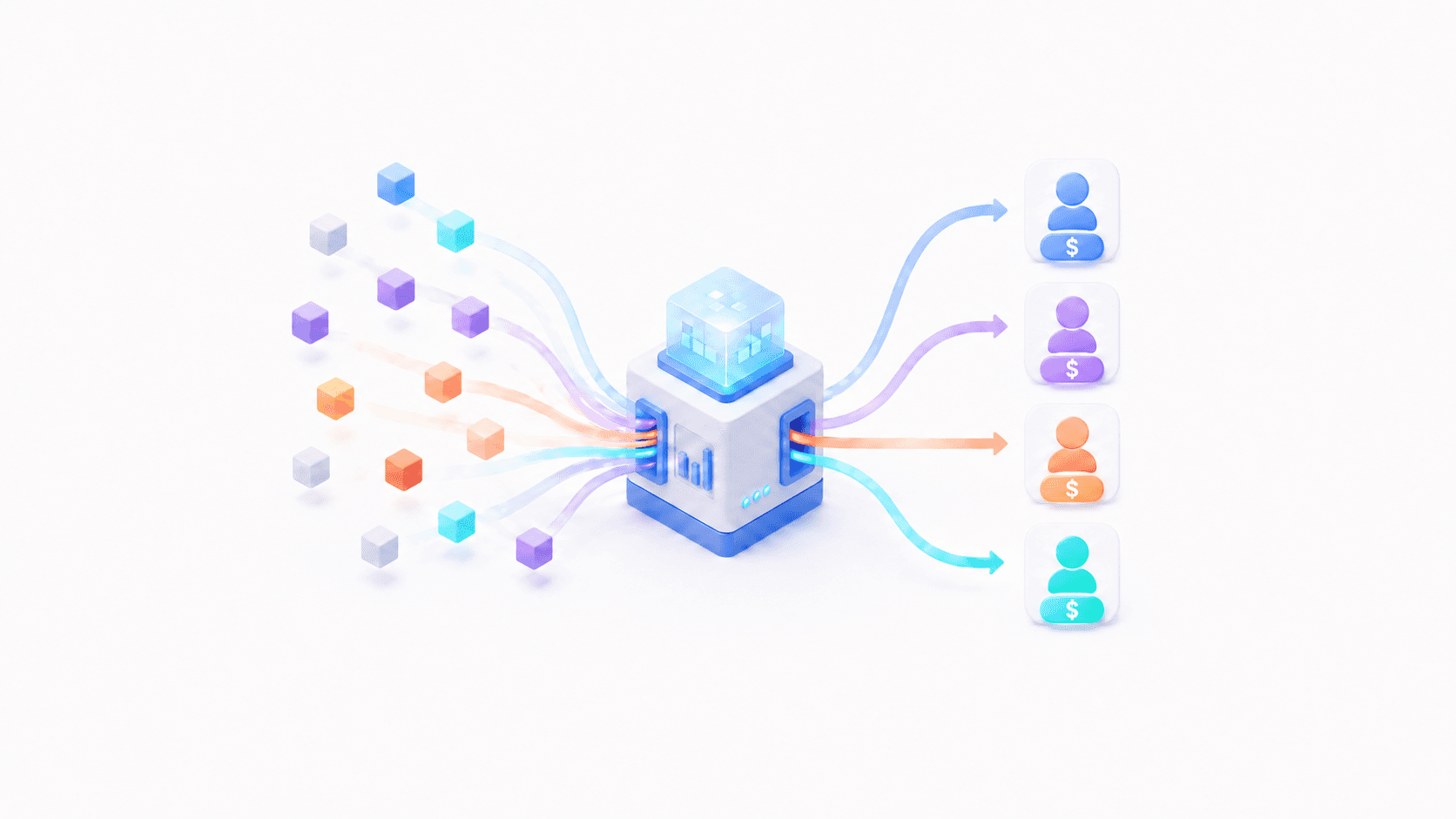
To completely dismantle the vulnerabilities inherent in static floors and avoid the punitive economic consequences of cascading strategies, mobile gaming publishers must adopt a model centered on hyper-personalized, dynamic bid-floor pricing. The fundamental objective of this solution is to calculate and deploy the optimal clearing price for each individual ad impression in real time, factoring in the nuances of the individual player, the immediate context of the game state, and the macroeconomic volatility of the market.
Such a solution must rapidly ingest a massive, high-dimensional feature space for every single ad request. These data points are fed into the system simultaneously, acting as the critical context for real-time prediction. To achieve optimal player-level and impression-level pricing, the myriad data points can be systematically categorized into five primary, highly actionable buckets:
1. Player Demographics
This category focuses on the foundational, static, or slowly changing attributes that map a user's broader identity and origin. It essentially answers who the user is and where they are located in the world. This bucket ingests granular geolocation data , language settings, privacy tracking consent statuses (like ATT), and any available explicit user profile data such as age and gender.
Examples:
A player's geographical location acts as a massive baseline multiplier. An advertiser will place a significantly higher bid for a user located in a "Tier 1" economy compared to a "Tier 3" economy, simply due to the higher purchasing power associated with that user.
In case of a player’s geographic location showing a Tier 3 geo, the language settings can indicate a Tier 1 traveller or higher purchasing power user. This signal can be used to set a higher floor.
2. Player’s Intrinsic Value
The intrinsic value vector determines the baseline financial worth of the player. This represents the player's long-term footprint, mapping how they interact with the game's economy, design, IAP monetization and ad loops over time.
Examples:
The pricing model tracks player responsiveness, measuring historical rewarded video completion rates, interstitial click-through rates (CTR). Players who actively engage with ad creatives represent premium inventory for performance advertisers. The model increases the price floor for highly responsive users, forcing DSPs to pay a premium for their attention.
A player’s overall engagement profile—including play frequency, session count, virtual wallet balances, and win/loss records—indicates their progression speed and investment in the game. Engagement profile is a great example of how each player needs to be valued dynamically. Data from one of our clients showed that players with very low engagement and very high engagement were getting lower bids, while the players with medium engagement were attracting highest bids. In theory this can be explained by bidders not wanting very low engagement players as they will not satisfy the engagement requirement in the advertiser’s game and bidders assigning a low probability of conversion to a highly engaged player. The bottom line being that every game requires a sophisticated ML engine to dynamically price each player.
The system tracks the player’s spending patterns, separating non-paying users from high-spending "whales". For a paying whale, showing a low-value, intrusive ad can disrupt their experience and cause them to churn, resulting in a net loss in lifetime value (LTV). In these scenarios, the system dynamically raises the bid floor to an exceptionally high threshold. This ensures that an ad is only shown if an advertiser is willing to pay an absolute premium that offsets the risk of disrupting a high-value player.
3. Player Context at Ad Request
This vector captures the state of the player at the exact millisecond they trigger the ad. The primary distinction is that Intrinsic Value determines the long-term baseline value of the player, whereas immediate Player Context maps their current operational, psychological, and engagement state in the active session.
Examples:
The model tracks the player's progression, noting the difficulty of the active level and whether they are on a win or loss streak. Triggering an ad request immediately after a player fails a highly challenging level creates a distinct, high-engagement moment. This situational context signals high intentionality, making the impression highly valuable for interactive rewarded video formats.
Setting a single, high static price floor across all session depths is highly inefficient. If a publisher maintains a rigid $10.00 floor for a user's 6th ad impression, the request will return zero fill because buy-side demand has naturally decayed. The dynamic flooring engine must progressively "soften" (lower) price floors as session depth increases. This ensures that early-session impressions capture premium bids, while late-session impressions remain eligible for lower-tier demand to avoid unsold inventory.
A game launches a 72-hour competitive weekend tournament, a live operations strategy designed to drive user session duration and engagement. Programmatic buyers bid aggressively to target users engaged in these high-value tournaments, the dynamic engine identifies the active tournament flag and increases the floor. This prevents DSPs from buying high-value, tournament-driven user attention at baseline off-peak rates, capturing the event's premium value.
4. Technical Signals
This bucket evaluates the hardware, software, and network ecosystem of the user's device. It logs the device make and model, processing capabilities, screen resolution, operating system version (iOS vs. Android), app version, SDK integrations, and the current network connection type (Wi-Fi vs. cellular).
Examples:
Premium flagship devices represent high-income user cohorts, allowing the system to set higher floor prices.
Devices operating with a 5G or strong Wi-Fi connection command premium bids because they guarantee high-definition video ads will render flawlessly without latency. If the technical signals indicate a spotty 3G network, the ad value decreases because DSP algorithms factor in the high probability of a rendering timeout or a poor user experience.
5. Market & Historical Signals
This category provides the macroeconomic environment, allowing the pricing model to understand the current density and volatility of the programmatic exchange. It analyzes historical clearing prices for similar impressions, overall bid density, win rates, time of day, day of the week, and broader seasonal demand trends across connected Supply-Side Platforms (SSPs).
Examples:
Ad value fluctuates wildly based on time and seasonality. The optimal floor price for an impression will naturally be higher during the final weeks of Q4 (when brands are exhausting their annual holiday budgets) compared to the sluggish first weeks of Q1.
The system tracks the relationship between floor levels and fill rates to identify where floors are filtering out significant bid volume. If the win-rate for a specific cohort is exceptionally high, the engine identifies that the floor is set too low relative to market demand.The system automatically adjusts the floor upward.
While building an in-house bid-floor optimization system promises ultimate control, it quickly evolves from a simple data science project into a massive, costly infrastructure burden. The core challenge isn’t training a machine learning model, it is maintaining a compliant, high-frequency revenue engine in a fiercely volatile market and dynamic environment.
1. The Data Engineering Nightmare
Effective floor optimization requires real-time, unified data across auctions, networks, devices, and post-auction events. Studios must build and maintain heavy infrastructure for event collection, feature generation, identity-safe aggregation, and historical replays. If input data is late, sparse, or inconsistent, the model becomes unstable, leading to erratic pricing decisions that destroy revenue.
2. The MLOps Burden (ML Is Just the Beginning)
Dynamic pricing is a per-query yield problem requiring continuous governance, not a "set-and-forget" model deployment. A robust system requires model versioning, drift monitoring, feature stores, inference orchestration, and automated fail-safes. Without dedicated MLOps, teams either stop updating the model out of fear or deploy dangerous pricing actions that alienate buyers.
3. Skyrocketing Infrastructure and Cloud Costs
High-frequency optimization demands massive streaming, storage, and compute resources on top of your existing ad data warehouse. You end up paying a premium to rebuild foundational tech that a vendor amortizes across hundreds of clients.¡
4. The "Siloed Data" Disadvantage
Vendor platforms continuously improve because they observe millions of market regimes, seasonal anomalies, and buyer behaviors across multiple clients. An internal team is trapped in its own traffic envelope, severely limiting the model's ability to learn, adapt, and maximize yield.
The Bottom Line: Unless monetization technology is your core product, building an in-house pricing engine is a costly detour. Buying a specialized solution allows you to capture immediate revenue lift while keeping your best talent focused on what they do best: making great games.